

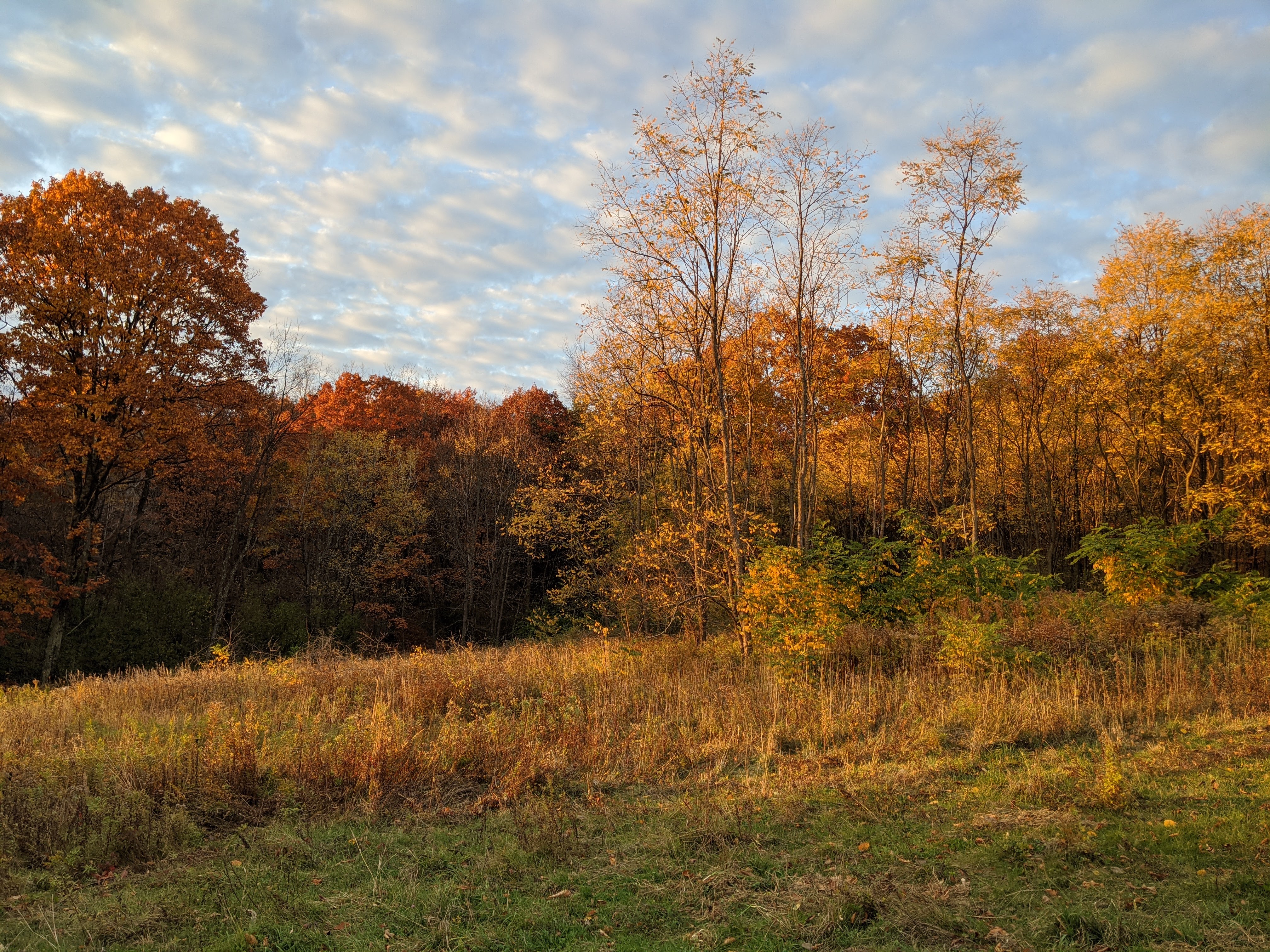
I’ve loved autumn since I can remember. In the American Northeast, it’s a beautiful time, with a full leaf show with the red of coal-stoked iron and yellow of pounded goldleaf. What I really like most is the symbolism that autumn has carried for me through the years. It’s the last leg of preparation for winter- or its symbolic equivalent of a time of want, or darkness. I used to work and live a very seasonally variable life- complete with a minor case of seasonal affective disorder-like symptoms. In autumn, I’d struggle to maintain normal moods and found it to be a long, slow, retreating fight to carefully manage those feelings. Summer sunshine and physical exertion gave way to less, and so I had to *think* my way into a good mood. Mostly it was coming to peace with the reduced mood and embracing it as another part of myself.
In JRR Tolkien’s telling of Earth prehistory, autumn is used as a motif for the waning of the Elves. The older, wiser race, they were created long before humans and they were also made closer to the image of the gods. They spent thousands of years with the gods as well, in direct contact, and so could far better resist the darkness when it did come.
The use of autumn imagery is used often for the Elves as their time on Middle Earth comes to a close, and the spring time of humankind is used in contrast- but a kind of turbulent spring, full of fits and starts. Even in bringing good change, humanity does it with such ugliness and rancor that it’s like March mud season, and June’s chance for brutal humidity, mixed in with those pleasant days symbolic of hope.
The analogy goes even so far to describe the long slow change of Middle Earth as it goes from the intense, loving stewardship of the Elves, to the mixed-bag stewardship and exploitation by humankind. In Tolkien’s storytelling, we are merely the next age of Middle-Earth’s history. In some ways, as creatures who weren’t around for the Elven kind of spring (the spring of creation, that wasn’t shaking off famine or death of winter, but simply waking up from the wound-clock starting point of the gods), we don’t mourn autumn as the start of the waning- we actually like it because it may be the best sliver of memory we have before darker times. In that sense, autumn’s the last thing we cling to before an arduous endurance, test of will, or character.
For Elves (an analogy, perhaps, for wiser beings in general- people who’ve lived long enough to have more to mourn), the autumn is already the mourning point because they knew the high points, when the world existed under a blanket of idealism or perfection that is slowly eroding as they lose energy to fight and maintain it. To them, autumn is not about impending winter- it’s about the end of endless bounty and ease.
Anyways, I do love autumn, because I feel like thanks to Tolkien’s writings, I can add a certain nobility or higher purpose to those symbolic “long, slow, losing fights.” Or perhaps not always a losing fight, but certainly one that takes three steps forward for two backward.
I deal with the seasonal mood changes far less, but getting older, it still feels like there are periods of life that just feel autumn-like, and they require this wisdom, and certain level of low but determined energy to emerge from. So I appreciate that my home region’s autumn leaf display is a direct physical symbol. The tree is marshalling resources (sugars traversing down to the roots) to survive the rough times, giving up on the green opulence of chlorophyll- it’s gone from determined mining of sunlight and accumulation, to the act of conserving and protecting. It turns the most outwardly noticeable part of the tree- the rippling leaves- into a form of beauty that is impossible to see in the good times. Nobility can often only be expressed in loss and hazard, in rearguard fights.
 The Wandering Farmer (an feirmeoir fánach)
Leave a comment